
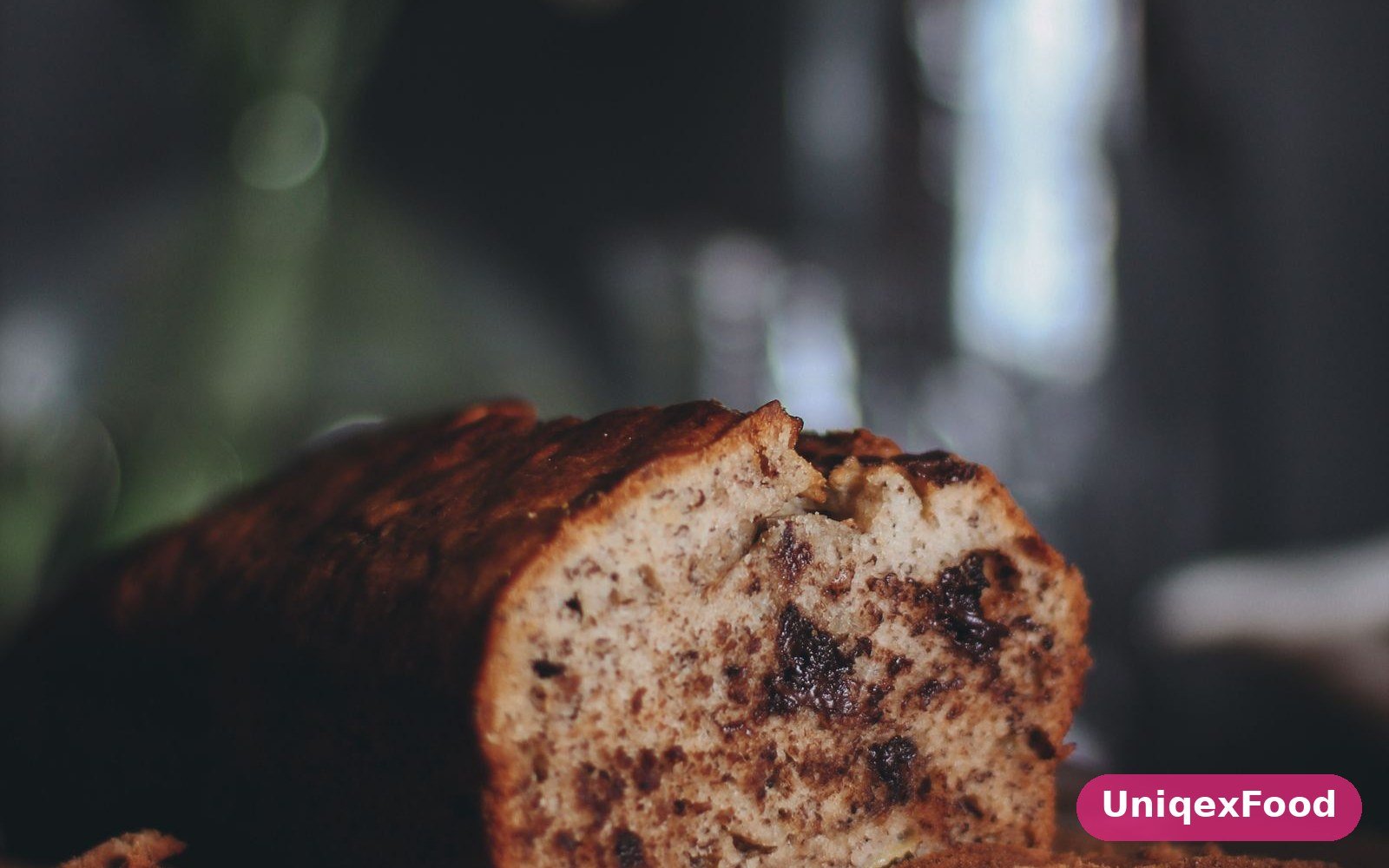
Chocolate Chip Banana Bread
Every kitchen has a moment when the bananas on the counter go from yellow to spotty to nearly black, and someone in the house says they are too ripe to eat. That is the moment this recipe exists for. Overripe bananas are not a problem to solve — they are the whole point of banana bread. The darker and softer the banana, the sweeter and more flavorful the bread, and the chocolate chips are there to make sure nobody complains about eating the bananas they refused yesterday. I have been making this loaf for years, and it is the recipe I reach for when I want something warm and homemade without turning the kitchen upside down.
What I love about this banana bread is that it asks almost nothing of you. One bowl, a fork for mashing the bananas, a spatula for stirring, and a loaf pan. There is no mixer, no creaming butter and sugar until your arm aches, no separate bowls for wet and dry ingredients. You mash the bananas in the bowl, stir in everything else, fold in the chocolate chips, and pour it into the pan. From the moment you start to the moment the loaf goes into the oven is about ten minutes, and most of that is peeling bananas. It is the kind of baking that fits into a real evening, between dinner and bedtime, without feeling like a project.
The result is a loaf that is moist and soft, with a tender crumb and a slightly crackled top, and chocolate in every slice — not just in some slices, which is the difference between a good banana bread and a disappointing one. The trick there is to use plenty of chocolate chips and to save a handful to sprinkle on top before it goes into the oven, so the finished loaf looks as generous as it tastes. I use semi-sweet chocolate chips most of the time, but dark chocolate is lovely too, and milk chocolate makes a sweeter loaf that children tend to prefer. There is no wrong answer, only different kinds of right.
This is also one of those recipes that makes the house smell like a bakery, and I mean that literally — the smell of banana bread baking has pulled my family into the kitchen more times than I can count, and it has a way of turning an ordinary afternoon into something that feels a little special. If you have never baked banana bread before, start here. It is forgiving, it is fast, and it is the recipe that will make you the person who always has banana bread in the house.
Why You’ll Love This Recipe
The first reason is how easy it is. One bowl, no mixer, ten minutes of work. You do not need any special equipment — a fork, a bowl, and a loaf pan are genuinely all it takes. I have made this with a wooden spoon, a spatula, and once, in a holiday rental with almost no kitchen tools, with the back of a mug to mash the bananas. It worked. That is the kind of recipe this is: it bends to whatever you have and still comes out well. If you are new to baking, this is a wonderful first loaf, because there is almost nothing you can do to ruin it.
The second reason is the texture. This banana bread is moist — properly moist, not wet, not dense, just soft and tender in a way that holds up for days. The secret is the combination of very ripe bananas and a little oil alongside the butter, which keeps the crumb soft long after the loaf has cooled. A lot of banana breads are wonderful warm from the oven and dry by the next day, but this one stays good for three or four days, and it is honestly just as good on day three as it is on day one. The chocolate chips help too — they melt slightly as the loaf bakes and create little pockets of chocolate that keep every slice interesting.
The third reason is that it uses up the bananas nobody wants to eat. Three overripe bananas go into this loaf, and they are the bananas that would otherwise end up in the bin. It is a small, practical kind of satisfaction, turning something that feels like waste into something your family asks for by name. I keep a bag of frozen overripe bananas in my freezer for exactly this purpose — peel them, freeze them whole, and thaw them when you want to bake — and it means I can make banana bread any time, even when the fruit bowl is empty. If you like baking with what you have, my blueberry muffins with crumb topping are another recipe built the same way, and they are just as forgiving.
And finally, it is versatile. This loaf works as breakfast, as an afternoon snack, as a lunchbox treat, and as a simple dessert with a scoop of ice cream. It is good warm, good cold, good toasted, and good plain. I have served it at brunch next to eggs and fruit, packed it for road trips, and given it as a gift to new neighbors, and it has never once been the wrong choice. If you want more banana bread inspiration, the BBC Good Food banana bread recipe is a classic worth comparing, and it is a good reminder that the best banana breads all start the same way — with bananas that are far too ripe to eat.
Ingredients You’ll Need
- 3 large overripe bananas, mashed (about 1 1/2 cups)
- 1/3 cup (75g) unsalted butter, melted
- 1/3 cup (80ml) vegetable oil
- 3/4 cup (150g) granulated sugar
- 1/4 cup (50g) brown sugar, packed
- 2 large eggs, at room temperature
- 1 teaspoon vanilla extract
- 1 3/4 cups (220g) all-purpose flour
- 1 teaspoon baking soda
- 1/2 teaspoon baking powder
- 1/2 teaspoon salt
- 1 teaspoon ground cinnamon
- 1 cup (175g) semi-sweet chocolate chips, plus 2 tablespoons for the top
- 1/4 cup (60g) sour cream or plain yogurt (optional, for extra moisture)
How to Make Chocolate Chip Banana Bread
Start with the bananas, because they are the whole foundation of this loaf. Peel three large overripe bananas — the darker the better, ideally with skins that are mostly brown or black and fruit that is soft enough to mash with a fork — and put them in a large bowl. Mash them with a fork until they are mostly smooth, with just a few small lumps left. You do not need them perfectly smooth; a few lumps are fine and they disappear into the loaf as it bakes. You should have about a cup and a half of mashed banana. If your bananas are on the smaller side, use four instead of three, because the banana is what makes this bread moist and flavorful, and skimping on it is the one mistake that will make the loaf dry.
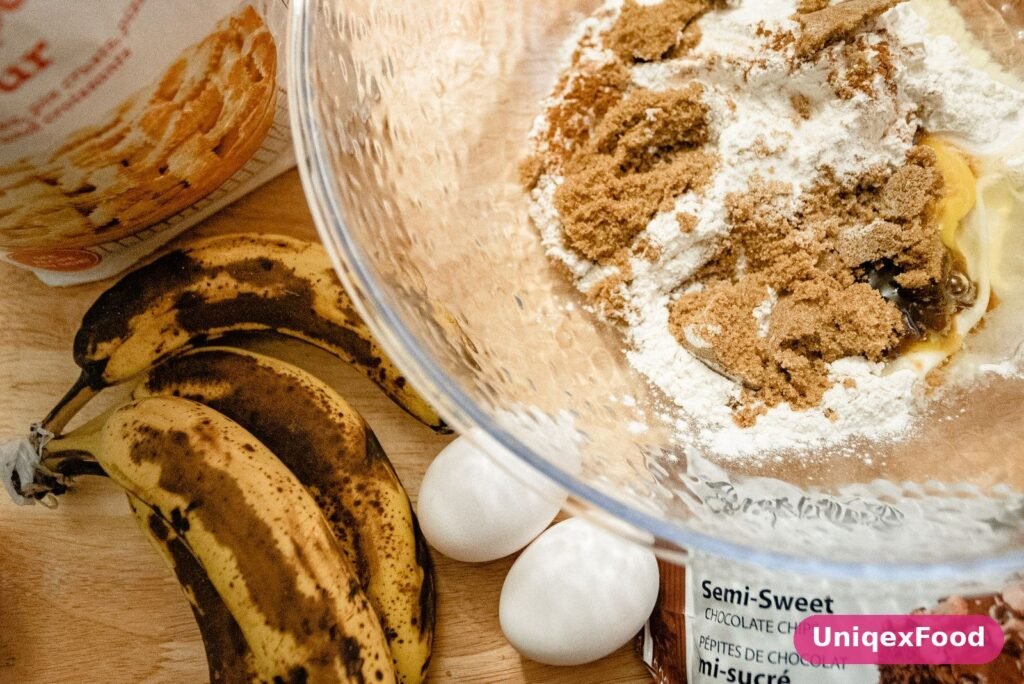
Pour the melted butter and the oil into the bowl with the mashed bananas, and stir them together with a spatula. Then add both sugars, the eggs, the vanilla, and the sour cream if you are using it, and stir until everything is combined into a thick, sweet-smelling batter. It will look a little loose and glossy at this point, and that is exactly right. There is no creaming step, no beating, no mixer — just a spatula and a few strokes, and the whole thing comes together in a minute. This is one of the reasons I make this recipe so often: it is the kind of baking that does not feel like work, and you can do it while the kettle boils.
Now sprinkle the flour, baking soda, baking powder, salt, and cinnamon over the top of the wet mixture, and fold them in gently with the spatula. Stir just until the flour disappears — you should still see a few streaks here and there, and the batter should look slightly lumpy. This is the same rule as with muffins: the less you stir, the more tender the loaf will be. Overmixing develops the gluten in the flour, and that is what turns a soft banana bread into a tough, dense one. Once the flour is mostly mixed in, add the chocolate chips and fold them through with three or four strokes, just enough to distribute them. Save the extra two tablespoons of chips for the top.
Heat the oven to 350°F (175°C) and grease a 9-by-5-inch loaf pan well, or line it with parchment paper with a little overhang on the long sides, which makes it easy to lift the loaf out later. Pour the batter into the pan and smooth the top with the spatula, then scatter the reserved chocolate chips over the surface. Put the pan in the oven and bake for fifty-five to sixty-five minutes, until the top is deep golden brown and a skewer or toothpick pushed into the center comes out clean or with just a few moist crumbs clinging to it. If the top starts to darken too much before the middle is done, tent a piece of foil loosely over the pan for the last fifteen minutes — it will protect the top while the center finishes baking. When the loaf is done, let it cool in the pan for ten minutes, then lift it out onto a wire rack and let it cool for at least thirty minutes before slicing. I know that is hard to wait for, and I have sliced it warm many times myself, but a warm loaf is fragile and the slices can fall apart, so if you can wait, wait.
Tips for the Best Banana Bread
The first and most important tip is about the bananas. Use bananas that are genuinely overripe — skins mostly brown or black, fruit soft and sweet-smelling, the kind of bananas you would not want to eat on their own. Green-tinged or just-yellow bananas do not have enough sugar or enough flavor, and the bread will come out pale and bland no matter what else you do. If your bananas are not ripe enough yet, you can speed things up by putting them in a paper bag with an apple overnight, or by baking them in their skins at 300°F for fifteen minutes until they turn black and soft. And if you have overripe bananas and no time to bake, peel them, freeze them whole in a bag, and thaw them when you are ready — frozen bananas work perfectly in this recipe and they mash even more easily.
The second tip is about mixing. Stir the batter just until the flour disappears, and then stop. I have said this before in other recipes and I will keep saying it, because it is the single most common reason banana bread turns out tough. A spatula is better than a whisk here, because it is easier to stop with a spatula, and counting your strokes helps — twenty gentle folds is usually enough. The batter should look a little lumpy and uneven when you are done, and that is correct. It is tempting to keep stirring until it looks smooth, but smooth batter is the enemy of tender banana bread.
The third tip is about the chocolate. Use good chocolate chips, and use plenty of them — a full cup, not a shy half cup. The chips should be in every slice, and the only way to guarantee that is to be generous. Tossing the chips in a tablespoon of flour before folding them in helps keep them from sinking to the bottom, though with a thick batter like this one they usually stay put anyway. Saving a handful to sprinkle on top is not just for looks — the chips on the surface melt and go slightly crisp, and they make the first bite of every slice a chocolate one. If you want more chocolate chip baking ideas, my chocolate chip cookies without brown sugar are another good use for the bag of chips in your pantry.
Finally, do not skip the cooling time, even though it is the hardest part. A banana bread that is sliced while it is still hot will crumble and fall apart, because the crumb has not set yet. Ten minutes in the pan, then out onto a rack, then at least thirty minutes before you slice it. And if the top of your loaf cracks as it bakes, do not worry: that crack is normal, it is a sign of a good rise, and it is the mark of a homemade loaf rather than a factory one.
Variations to Try
For a nutty version, fold in half a cup of chopped walnuts or pecans along with the chocolate chips. The nuts toast as the loaf bakes and add a crunch that contrasts beautifully with the soft crumb, and the combination of banana, chocolate, and walnut is a classic for a reason. Toast the nuts in a dry pan for a few minutes first if you have the time — it deepens their flavor and makes a noticeable difference. If anyone in your house has a nut allergy, leave them out entirely; the loaf is wonderful without them, and the chocolate carries it on its own.
For a spiced version, add a quarter teaspoon of nutmeg and a pinch of ground cloves alongside the cinnamon, and swap the chocolate chips for a mix of chocolate and butterscotch chips. It tastes like autumn, and it is the version I make in October and November, when the house is cold and the oven is the warmest place in the kitchen. A little orange zest stirred into the batter is another nice touch — it brightens the banana and makes the whole loaf taste fresher.
You can also turn this into muffins. Divide the batter between twelve muffin cups, sprinkle the tops with a few extra chocolate chips and a little coarse sugar, and bake at 375°F for eighteen to twenty-two minutes. They are the same loaf in a smaller, more portable form, and they are wonderful in a lunchbox. And if you want to make the loaf richer, swap half the chocolate chips for chunks of dark chocolate, or stir in two tablespoons of cocoa powder and a handful of extra chips for a double chocolate banana bread. If you enjoy this kind of one-bowl baking, my small-batch oatmeal cookies without eggs are another easy bake that comes together in a single bowl, and they are just as forgiving.
Serving Ideas
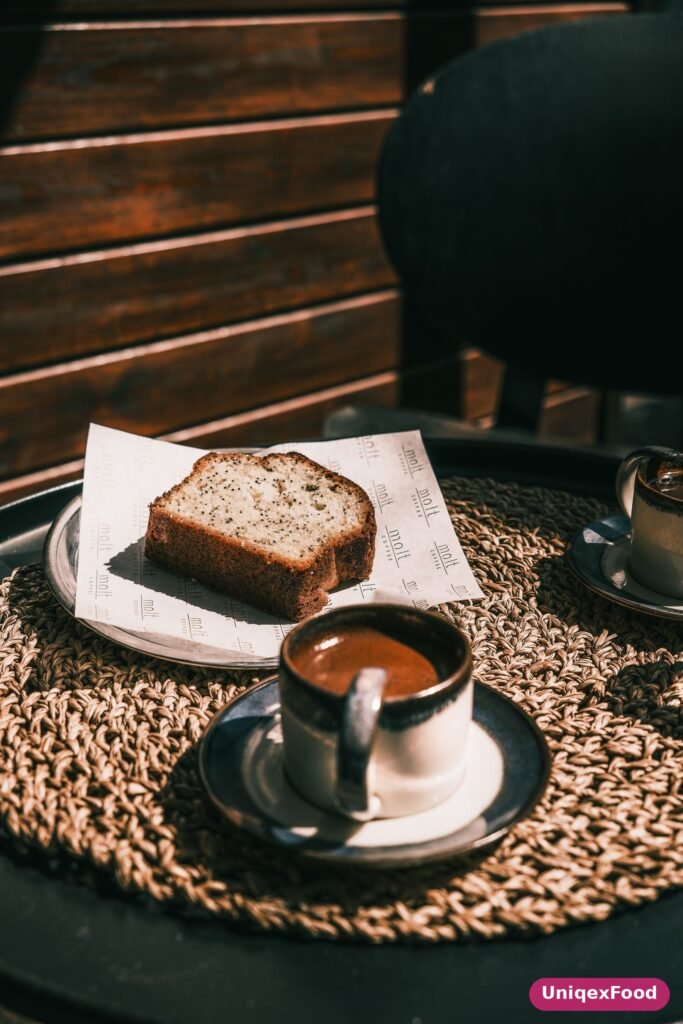
The simplest way to serve this banana bread is warm from the oven, or lightly toasted the next morning, with a smear of salted butter. The butter melts into the warm crumb, the chocolate is still soft, and it is the kind of breakfast that makes an ordinary Tuesday feel like a small occasion. A cup of coffee or tea alongside it is all you need, and I have eaten more slices of banana bread standing at the kitchen counter with a mug in my hand than I have sitting at the table. It is that kind of food.
For a proper weekend brunch, slice the loaf thickly and serve it alongside scrambled eggs, fresh fruit, and yogurt. The banana bread is the sweet anchor of the spread, and it balances the savory eggs in a way that makes the whole table feel generous without much effort. You can also toast the slices and serve them with a dollop of mascarpone or cream cheese and a drizzle of honey, which turns a humble loaf into something that feels like a dessert. I have done this for guests and watched them assume I had bought it from a bakery, which is a compliment I will happily accept.
As a dessert, banana bread is wonderful warmed and served with a scoop of vanilla ice cream, or with a spoonful of whipped cream and a few berries on the side. It is not a fancy dessert, but it is a satisfying one, and it is the kind of thing people ask for again. It also travels well — wrap slices individually for lunchboxes, picnics, and road trips, and they will hold up without falling apart. If you are building a baking box for a friend, pair a few slices of this with my small-batch chocolate chip cookies without a mixer, and you will have a gift that disappears fast.
Storage and Reheating
This banana bread keeps at room temperature for three to four days, wrapped tightly in cling film or stored in an airtight container. Let it cool completely before you wrap it, because wrapping a warm loaf traps steam and makes the top go soft and sticky. After the first day, the top will lose a little of its crispness, but the crumb stays moist and the flavor actually deepens — banana bread is one of those bakes that tastes better on day two than on day one, which is a useful thing to know if you are baking ahead for the weekend.
To bring a slice back to life, toast it lightly in a toaster or warm it in the oven at 300°F for five minutes. The chocolate softens again, the edges crisp up slightly, and it tastes almost like it just came out of the oven. A smear of butter on a warm slice is the finishing touch. Do not microwave a whole loaf — it will go soft and gummy — but a single slice for fifteen seconds is fine if you are in a hurry.
This loaf freezes beautifully, which is why I often bake two at once. Let it cool completely, then wrap the whole loaf tightly in cling film and then in foil, or slice it first and wrap the slices individually. Either way, it will keep in the freezer for up to three months. To thaw a whole loaf, leave it on the counter overnight. To thaw a single slice, leave it on the counter for an hour or warm it from frozen in the oven at 300°F for ten minutes. Frozen banana bread, warmed in the oven, tastes so close to fresh that I have served it to guests who never knew the difference.
Frequently Asked Questions
Can I use bananas that are not very ripe?
You can, but the bread will not taste as good. Ripe bananas are sweeter, softer, and more flavorful, and they are what give banana bread its characteristic taste and moisture. If your bananas are just yellow with a few spots, the bread will still work, but it will be paler, less sweet, and a little drier. If that is all you have, add an extra tablespoon of sugar and a little more vanilla to compensate, and consider adding the sour cream or yogurt, which helps with moisture. Better still, ripen the bananas quickly: put them in a paper bag with an apple overnight, or bake them in their skins at 300°F for fifteen minutes until they turn black and soft. And remember the freezer trick — peel overripe bananas, freeze them whole, and you will always have ripe bananas ready to go.
Why did my banana bread sink in the middle?
A sunken middle usually means the loaf was underbaked, or the oven temperature was too low, or there was too much leavening. The most common cause is pulling it out of the oven too early — the center looks set, but it is still wet inside, and it collapses as it cools. Always test with a skewer pushed right into the center: it should come out clean or with just a few moist crumbs, never with wet batter. The other common cause is too much baking soda, which makes the loaf rise fast and then fall. Measure your baking soda carefully — level teaspoons, not heaped ones — and check that it is fresh, because old baking soda loses its power and can cause uneven rising. Also, do not open the oven door in the first thirty minutes, because the rush of cool air can make the loaf sink.
Can I make this banana bread without eggs?
Yes, and there are a few good substitutes. The easiest is to add an extra half banana, mashed, in place of each egg — the banana adds moisture and binding, and since the loaf is already banana-based, the flavor stays right. You can also use a flax egg: one tablespoon of ground flaxseed mixed with three tablespoons of water, left to sit for five minutes until it gels. Or use a quarter cup of unsweetened applesauce per egg. The loaf will be a little denser than the original, but it will still be moist and good.
How do I know when banana bread is done?
The best test is a skewer or a long toothpick pushed into the very center of the loaf. It should come out clean, or with just a few moist crumbs clinging to it. If it comes out with wet batter, the loaf needs more time — give it five more minutes and test again. The top should be deep golden brown, and the loaf should have pulled away slightly from the sides of the pan. You can also press the top gently: it should spring back rather than leaving a dent. And if you have a thermometer, the internal temperature should be around 200°F to 205°F. If you ever want to double-check safe temperatures and handling for home baking, the USDA food safety guidance is a reliable place to look. When in doubt, err on the side of a few extra minutes — a slightly overbaked banana bread is dry but edible, while an underbaked one is gummy in the middle and cannot be fixed.
Can I freeze banana bread?
Yes, and it freezes beautifully, which is one of the best things about this recipe. Let the loaf cool completely, then wrap it tightly in cling film and then in foil, or slice it first and wrap the slices individually in cling film before putting them in a freezer bag. It will keep for up to three months. To thaw a whole loaf, leave it on the counter overnight. To thaw a slice, leave it out for an hour, or warm it from frozen in the oven at 300°F for ten minutes. The chocolate softens again as it warms, and the crumb stays moist. I almost always bake two loaves and freeze one, because a homemade banana bread in the freezer is a small gift to your future self on a morning when you do not feel like baking.
What is the best pan for banana bread?
A 9-by-5-inch metal loaf pan is the standard, and it is what this recipe is written for. Metal pans conduct heat well and give you an even bake with a nicely browned crust. Glass pans work too, but glass holds heat differently — it heats more slowly and stays hot longer — so if you use glass, lower the oven temperature by 25°F and check the loaf a few minutes earlier, because the edges can overbake. Dark nonstick pans also bake faster, so check five minutes early. Whatever pan you use, grease it well or line it with parchment, because banana bread is sticky and it will cling to an ungreased pan. And do not use a pan that is much larger than 9-by-5, or the loaf will be flat and wide instead of tall.



One Comment